Why AI-First Products Need an Analytics Substrate Not an Analytics App
Agents need governed, fresh data that dashboards were never built to serve.
For API-first and agent-first teams, the right analytics backend is a headless analytics substrate. AI-first products need fresh, governed datasets that agents can query programmatically without touching production. A substrate separates metric definitions and data access from presentation, so usage analytics can serve an agent, a custom interface, or a human report without requiring a prebuilt dashboard UI.
What analytics apps were built for and why that design assumption is now breaking
Analytics apps were built for a person to open a dashboard, pull a report, read a number, and decide what to do. Each request begins with human intent. The interface presents information for someone to interpret, and the query runs when that person asks for it. A logged-in session establishes who is asking, while permissions determine which views that person can see.
That arrangement works when a human initiates the request and judges the result before acting. The person supplies context that the interface does not have to express. A number is an input to a decision. The app can therefore organize its work around the experience of reading and exploring data.
Agents change who consumes the data and how. They query on schedules or triggers, without a browser or an interactive session, and use the answer inside a workflow. They may act on the result. The design assumption breaks because the consumer no longer supplies the human interpretation and interaction around which the app was built.
What agents actually require from a data layer
Freshness is the first requirement for agent-ready data infrastructure. An agent needs data that reflects current reality. When a result informs an action, the age of that result becomes part of its fitness for use. Fast retrieval alone is not enough if the underlying data is stale.
Agents also need an endpoint a process can call and governed context that explains the response. Metric definitions, entity relationships, and semantic schemas tell the agent what a number means. Permission enforcement must travel with the request. The data available through that endpoint must also be separated from the production database running the product.
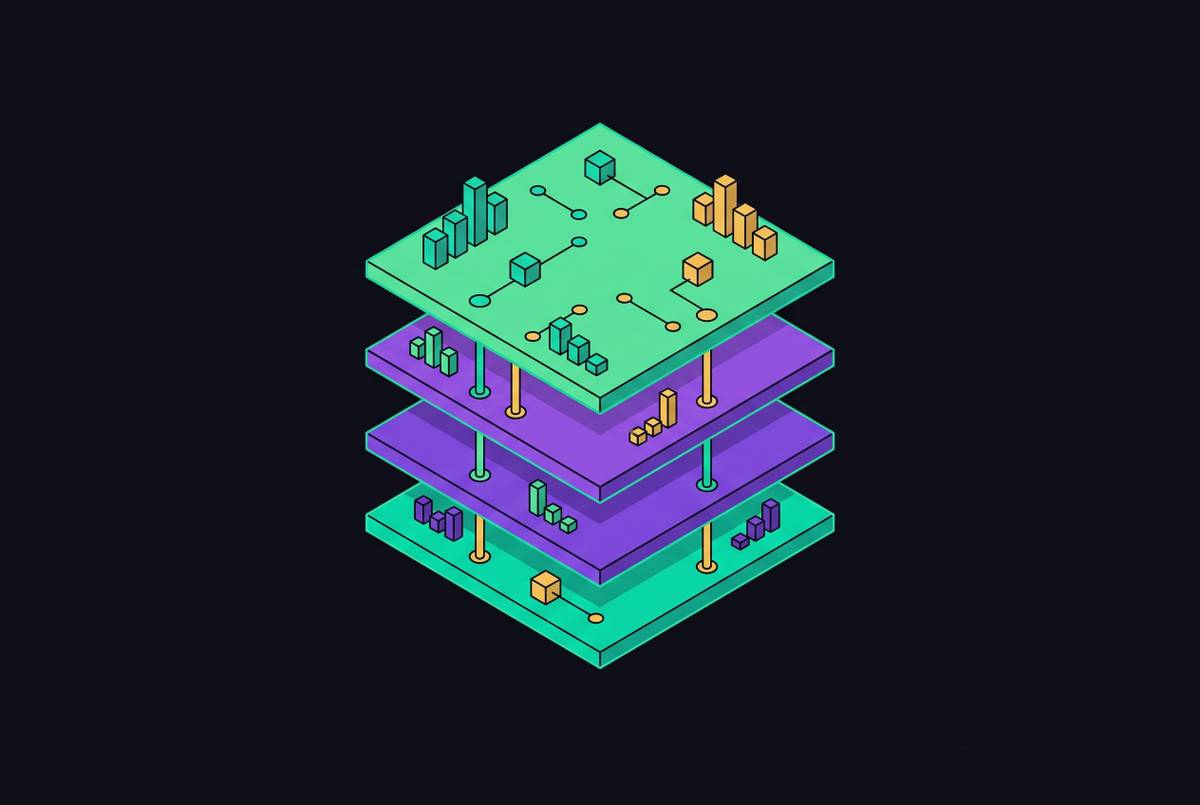
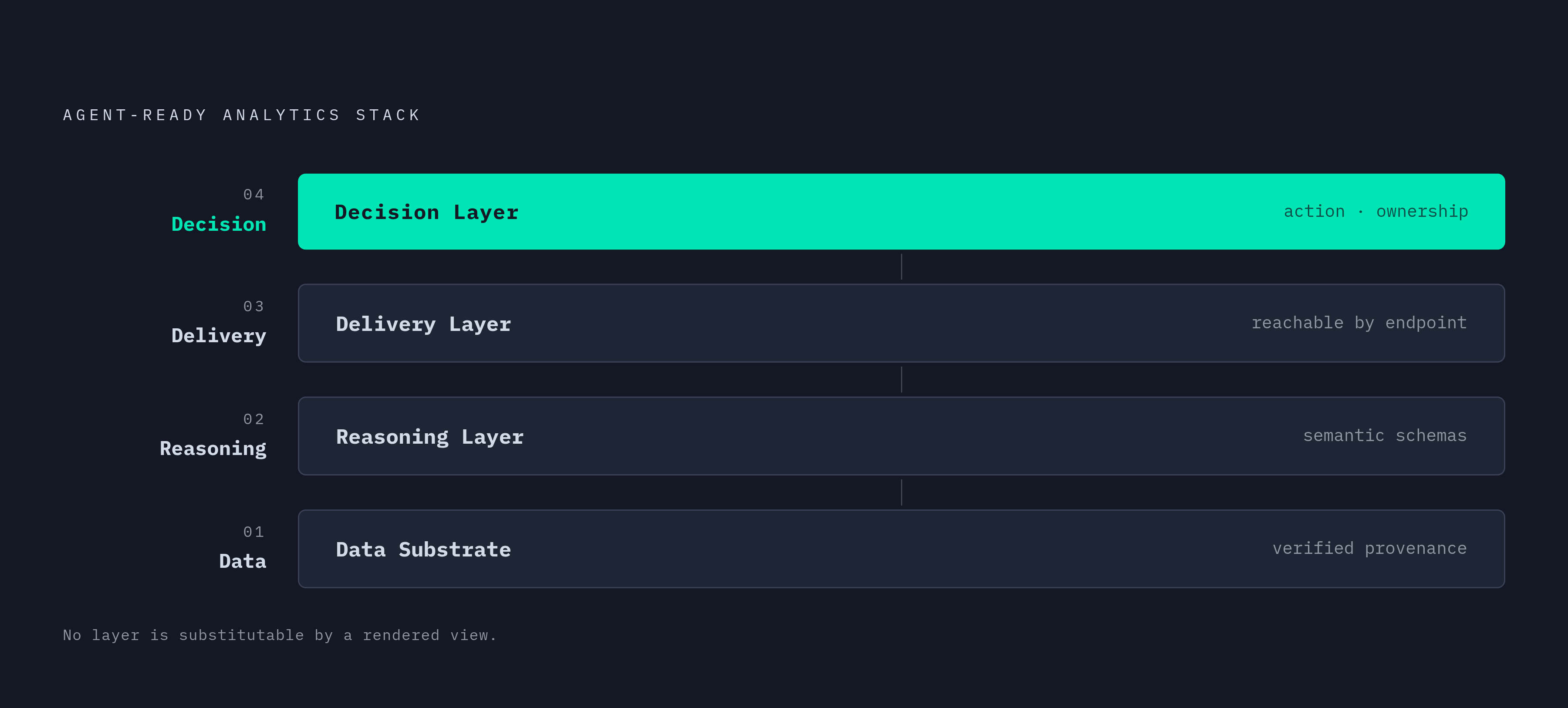
These infrastructure requirements divide the stack into four distinct concerns, including a data substrate with verified provenance, a reasoning layer with semantic schemas, a delivery layer reachable by endpoint, and a decision layer where action and ownership live. That separation distinguishes the source of a fact from its interpretation, its delivery, and the authority to act on it. None of those responsibilities can be replaced by a rendered view.
Why plugging an agent into an analytics app does not close this gap
An API changes how a caller reaches an app, but it does not necessarily change what the app serves. The endpoint can still expose the data model built for the interface and the staleness introduced by its refresh schedule. Without a shared semantic layer, the agent can read the metrics but has no definition it must follow.
Consider two engineers who query the same records. One writes SUM(revenue) and another writes SUM(amount_captured), so they get different results even though both queries read correct data. An agent given those tables can read them in yet another way. An endpoint still leaves callers to agree on which calculation to use for the business metric.
The same mismatch appears in identity and latency. A session-based permission model can leave an agent overprivileged or unable to reach data through paths designed for a logged-in person. A human can wait two seconds for a dashboard to render, while an agent repeatedly calling a data endpoint inside a multi-step workflow cannot absorb that overhead at scale. Closing these gaps requires changes beneath the app. The response is a different kind of system.
What analytics backend gives teams API control without an opinionated frontend
An analytics substrate is a governed data layer beneath the interfaces that consume it. It serves human dashboards, agent workflows, and Slack digests from the same pre-modeled, pre-calculated datasets. Metrics are calculated ahead of time rather than reconstructed whenever a caller asks a question.
Headless CMS separated content from its presentation so that one source could feed a website, a mobile app, and an API. Headless analytics applies that separation to metrics, allowing a report, an agent workflow, and a push notification to use the same governed numbers.
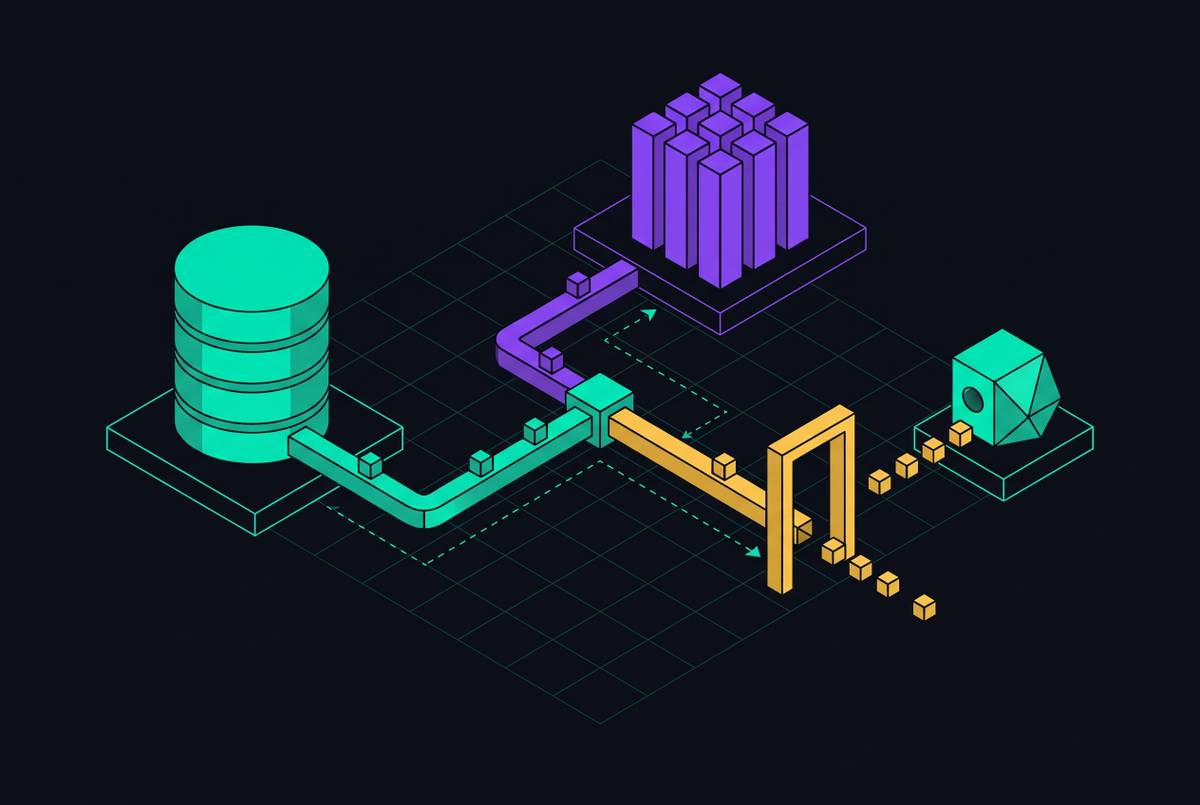
Governed Parquet datasets queryable via DuckDB provide a concrete implementation pattern. They support fast, accurate, inexpensive queries while remaining separate from production connection pools. Agents can discover available datasets and request them by name through Resources and Tools, without sending their queries to the production database. An API call, an MCP endpoint, or a scheduled report can consume that layer without imposing a particular dashboard.
Why letting agents query production Postgres directly is not a shortcut but a risk
A read-only connection limits writes while leaving the load that analytical reads place on the database unchanged. Scaling an MCP server does not expand the underlying Postgres instance’s capacity. Agents can exhaust its connection pool and degrade the product for real users even when every query is read-only.
Row-level security can also affect how fast queries run. Postgres evaluates it per row, so a naive policy that re-evaluates an authentication function for every row in a large table can cost orders of magnitude more than a correctly structured policy. Restricting which records an agent can read does not, by itself, make those reads inexpensive.
Production credentials that allow more access also leave data at risk of corruption from bugs, unexpected inputs, or prompt injection. Before the Tool Call: Deterministic Pre-Action Authorization for Autonomous AI Agents characterizes the authorization gap as credentials without per-action permission enforcement and reports that restrictive pre-authorization reduced attacker success to near zero in its testing. The joint guidance from Five Eyes intelligence agencies in May 2026 also called for least-privilege enforcement.
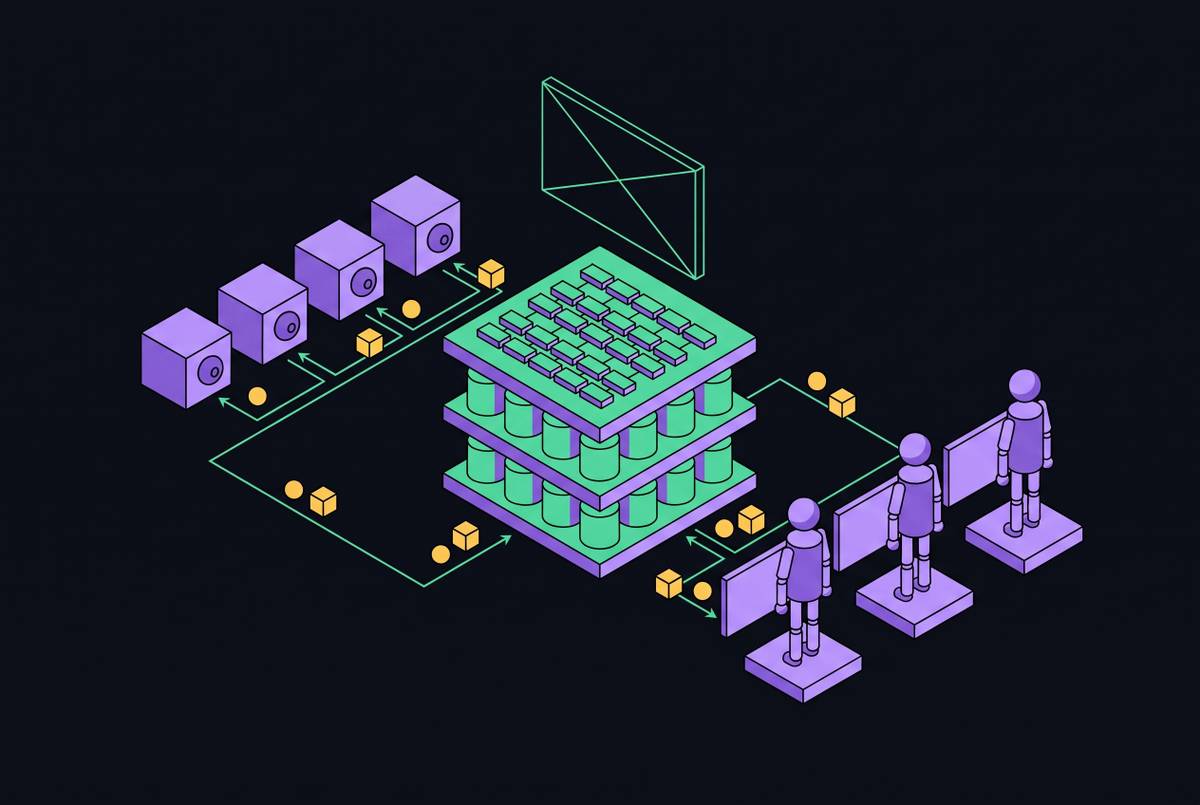
The architectural fix is a governed analytical copy behind the MCP server. Agents query pre-calculated datasets, so their queries put no load on the production instance.
MCP as transport and why a semantic layer is still required on top of it
MCP is often described as the solution to agent data access, but it is part of the solution. It standardizes how agents connect to sources, replacing a proliferation of point-to-point connectors with a uniform interface. It does not define what the returned data means. Transport and meaning remain separate responsibilities.
A semantic layer sets out what metrics, entities, and relationships mean and which governance policies apply. It makes “churn” the same metric for an agent and a human analyst, rather than a raw table whose interpretation changes with the prompt. MCP supplies access, while the semantic layer supplies context. Without that context, making it easier to connect can make metric drift happen faster.
The July 28, 2026 MCP specification revision removed protocol-level session tracking, so the protocol is stateless and easier to scale on ordinary HTTP infrastructure, but the layer above it still has to supply the same things. Stateless transport does not eliminate the need for identity. In a governed deployment, every agent reaches data through one access-controlled interface, regardless of the LLM behind it. Each agent has an entry in an inventory that lists its registered owner, what it is for, which connectors it can use, and its least-privilege data access.
What metric drift looks like inside an AI-first product and how a substrate prevents it
Consider a growing product team and an agent both reading “active users.” If the definition was never agreed, the team’s query and the agent’s query can return different counts from the same correct records. The disagreement begins in how each caller interprets it.
Inside an AI-first product, that discrepancy becomes operational. An agent deciding which users to surface, which customers to flag, or which features to gate can act on a number the product team would not recognize as correct. A reporting inconsistency has entered the product’s behavior. Faster queries do not resolve that failure.
A substrate prevents this form of drift by calculating metrics from agreed definitions and serving those calculations to every consumer. The data dictionary is the governance artifact it puts into operation. It establishes one definition and one source of truth for terms such as “churn” and “active user.
That discipline also applies across the business. Every metric on a CEO dashboard should reconcile to a single source, with ARR from the billing system, usage from the analytics layer, and cash from the bank. When sales, finance, and product each have their own version of ARR, they disagree before any agent arrives. A substrate without agreed definitions merely delivers that disagreement more efficiently.
Observability as the prerequisite that makes a substrate trustworthy over time
A governed layer needs evidence that it remains reliable. Query latency, connection pool pressure, error rates, and data freshness show how the layer is working. Without those signals, a team cannot tell whether fast responses have current data or whether access puts a strain on shared infrastructure.
Teams should instrument the substrate from day one. Observability helps teams decide when to scale, so they need it before they reach that scale. Teams can act before a user notices a problem when signals cross thresholds for database CPU, active connections relative to the limit, average query time, and error rate.
For Supabase projects, that coverage should extend across the database, API layer, authentication flows, storage, Edge Functions, and client-facing errors. The 2026 best practice separates Postgres Changes for durable, consistent state from Broadcast for ephemeral, high-frequency events. Observability helps expose a Realtime topology that does not fit its traffic pattern.
Supabase’s main GitHub repository reached 100,000 stars in April 2026, with millions of developers on the platform, making deliberate infrastructure choices increasingly important as production workloads scale. Platform adoption does not establish the reliability of an individual implementation. A substrate that cannot be observed is not a source of truth, but a source of unverified claims.
How teams without a dedicated data function can build toward a substrate today
For founders and small teams, the path begins with definitions. The substrate can grow incrementally from the highest-stakes metrics. Early on, teams should measure pull, including retention, activation, and what users do. Later, teams can focus on how efficiently the business runs by measuring payback, net revenue retention, and margin. The list should stay short, with raw counts next to percentages when samples are small.
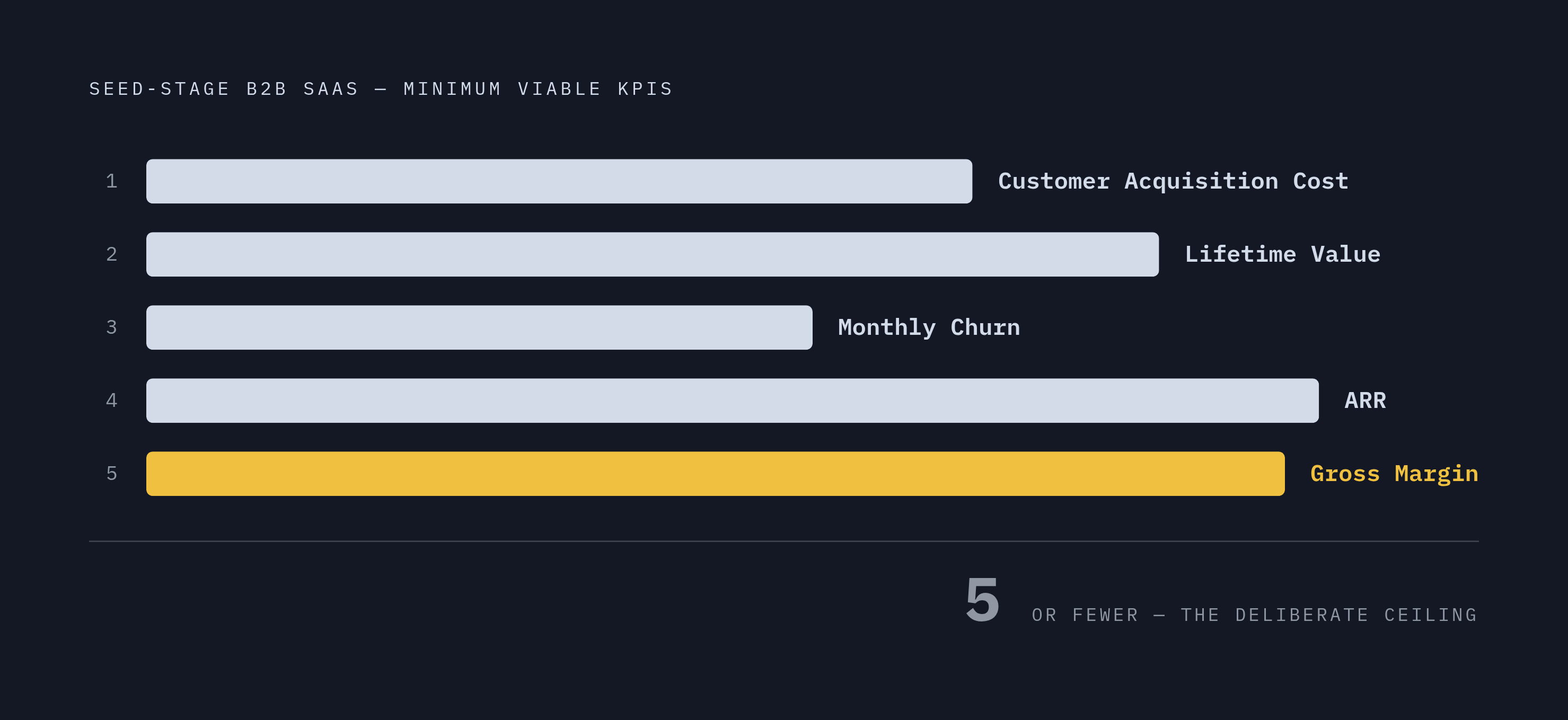
For a seed-stage B2B SaaS team, the minimum viable substrate is five or fewer actionable KPIs drawn from customer acquisition cost, lifetime value, monthly churn, ARR, and gross margin. For each metric they choose, teams need to agree on a definition and serve a pre-calculated value from one layer. Scope is deliberately narrow at this stage. Additional metrics do not compensate for uncertainty in the ones that drive decisions.
The implementation sequence follows that constraint. First, agree on definitions, then model them into pre-calculated datasets, and then expose those datasets through a governed endpoint that humans and agents both consume. Building the infrastructure first risks encoding disagreement. Teams can start this work before they have a dedicated data function.
People and agents can rely on the same numbers because their definitions are governed, their delivery is observable, and their queries are isolated from production. That is the foundation an AI-first product needs before analytics becomes part of how the product acts.