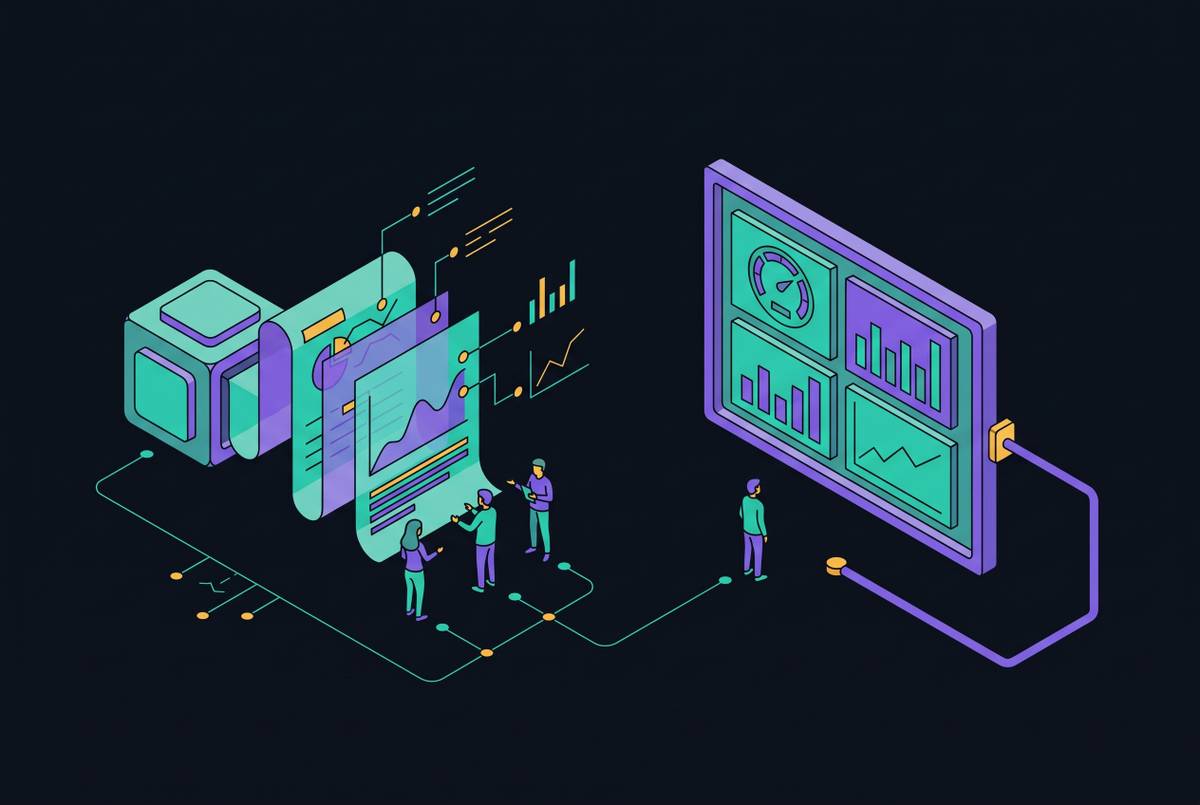
Choosing Analytics Infrastructure When Supabase Is Your Operational Database and Your AI Product Needs Raw API Access
A governed analytics layer keeps agents and dashboards off production Postgres.
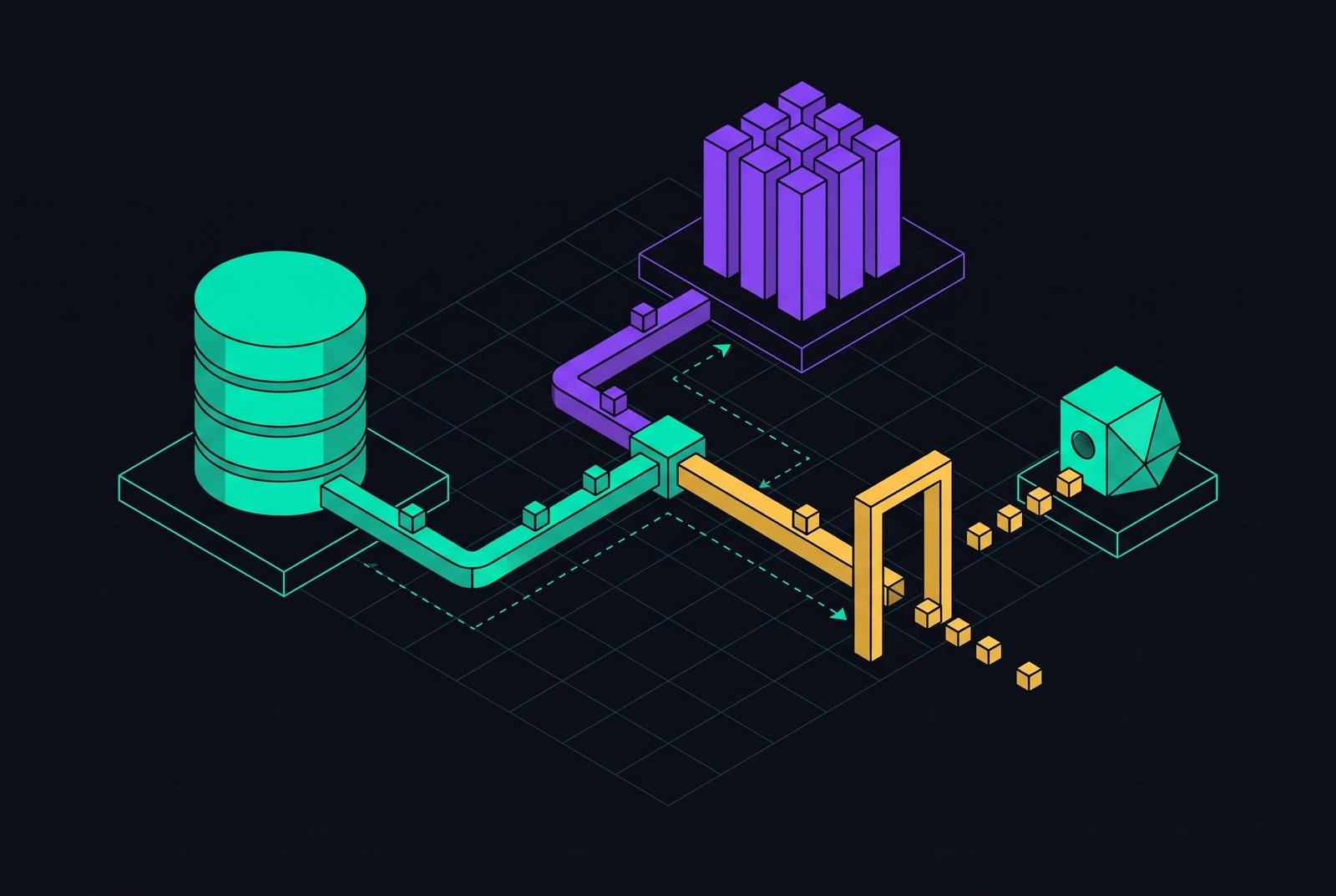
For API-first and agent-first teams building on Supabase, the right headless analytics backend separates governed, pre-modeled data from production Postgres. It gives human interfaces and AI agents API access to the same metric definitions without making them use an opinionated frontend or compete with live traffic. Full API control should mean access restricted to approved analytical datasets.
Why Supabase works well as an operational database but not as an analytics layer
Supabase gives AI product teams a fully managed Postgres instance with auto-generated REST and GraphQL APIs, built-in auth, RLS, realtime subscriptions, edge functions, and pgvector. That combination provides a complete operational backend without assembling separate services. Postgres fits this role well because its row-oriented engine is tuned for fast lookups, inserts, and updates. Analytics asks it to do different work. Queries that scan and aggregate large parts of a table use the same CPU and memory that production needs to serve live app traffic.
A policy that calls auth.uid() directly can be re-evaluated for every row on a large table. Wrapping that call as (select auth.uid()) lets the planner treat it as an initPlan evaluated once, a change that can turn seconds into milliseconds. The improvement is real but narrowly scoped. It changes how a policy executes while leaving the underlying difference between transactional access and analytical scans intact.
Connections and data representation introduce further mismatches. Supavisor's transaction mode works with short-lived connections but does not support the prepared statements that BI tools need. Direct connections work, but keep long-lived sessions open against the database that serves the app. JSONB creates a different kind of ambiguity. Its flexibility helps teams build, but most charting tools cannot read those columns directly, so teammates write different extraction queries and get different numbers from the same records.
The two paths teams reach for first, and what they actually cost
When dashboards slow production, teams typically upgrade compute or add a read replica. A compute upgrade gives the database more resources, but the BI workload drives that expense. As the events table grows, its analytical queries can push the team progressively up the compute ladder. Capacity increases without changing the workload's shape. The database still scans and aggregates rows while supporting the application's transactional work.
A read replica moves analytical reads away from the primary, but it is a separate budget decision. It runs the same compute size as the primary and bills separately, without the benefit of plan compute credits. Disk costs extra, with a charge above what the primary's size would cost. In practice, a replica roughly doubles database spend. That expenditure buys another row-store engine with the same JSONB friction and RLS modeling constraints, leaving the need for an analytical layer that can also join Stripe revenue, CRM records, or ad spend unresolved.
Neither option resolves connection exhaustion as a category of risk. Serverless functions open their own connections on cold starts and do not reliably close them, while every compute tier limits concurrent Supavisor pooler clients. Reaching that limit has an immediate operational consequence. Transaction mode rejects new clients rather than queuing them, while session mode queues them for up to a minute before rejection.
Why AI agents querying production Postgres directly create a distinct category of risk
An AI agent inherits the analyst's compute, connection, and RLS problems, but its access pattern introduces additional exposure. Each invocation can open a connection, and repeated tool calls or multi-agent systems can exhaust the pool. The symptom looks like an operational outage. An analytical request can keep other clients from reaching the database, so agent activity can harm production as well as slow queries.
Traditional role-based access control is often inadequate for agents that operate dynamically and may require temporary permissions. Broad table access can close that functional gap, but only by making production data reachable more widely than would be approved for a human analyst. That trade-off is not just about speed. It concerns what an agent can reach while deciding how to complete a task.
Even with the right limits on access, an agent still needs to know what the data means. If three analysts use different SQL definitions of a conversion event, querying faster will not help an agent settle which one to use. It must choose a definition or invent one. This is the risk described as semantic bypass, where table access without semantic context leaves the agent guessing, while semantic context without query access leaves it unable to answer. The exposure runs both ways, because agents can degrade production performance, and unstructured production access can degrade the accuracy of agent outputs that propagate to downstream consumers.
What analytics backend works best when Supabase teams need full API control?
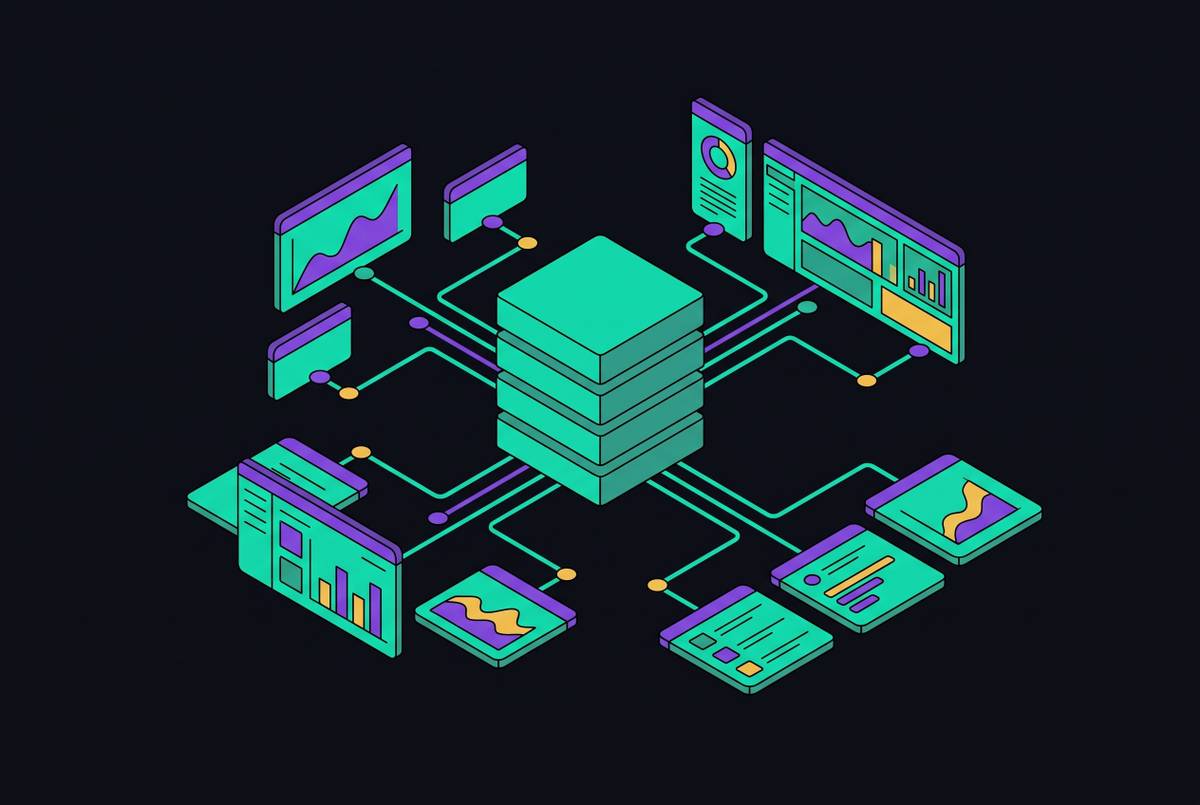
The appropriate backend holds pre-modeled, pre-calculated data derived from production Postgres but decoupled from it. Columnar engines query that data, clear access rules control who can use it, and human interfaces and agents use the same access point. The frontend becomes an independently selectable part of the architecture. This is the headless pattern for teams that want to build their own product experience or add usage analytics to an agent without adopting a prebuilt dashboard UI.
Pre-calculating metrics at that boundary gives definitions a stable home. MRR or conversion rate is defined in the model, giving query authors a shared definition for their SQL. The layer can also hold Stripe revenue, CRM records, and ad spend that production Postgres never held, so it can answer cross-source questions that a replica alone cannot. Its access rules are separate from application RLS, so app-user row isolation and analyst-or-agent scans no longer depend on the same policy surface.
Supabase's self-hosting documentation recognizes a related separation in its own analytics architecture. The Analytics server, Logflare, is a separable, optional service. For production self-hosting, the documentation recommends BigQuery as its backend instead of Postgres, which it describes as not optimized for high insert volume or heavy query usage. That recommendation has a specific scope. It concerns the self-hosted analytics service, but reinforces the broader distinction between an operational database and the infrastructure used for heavy analytical work.
How MCP makes a governed analytical layer accessible to agents without direct database exposure
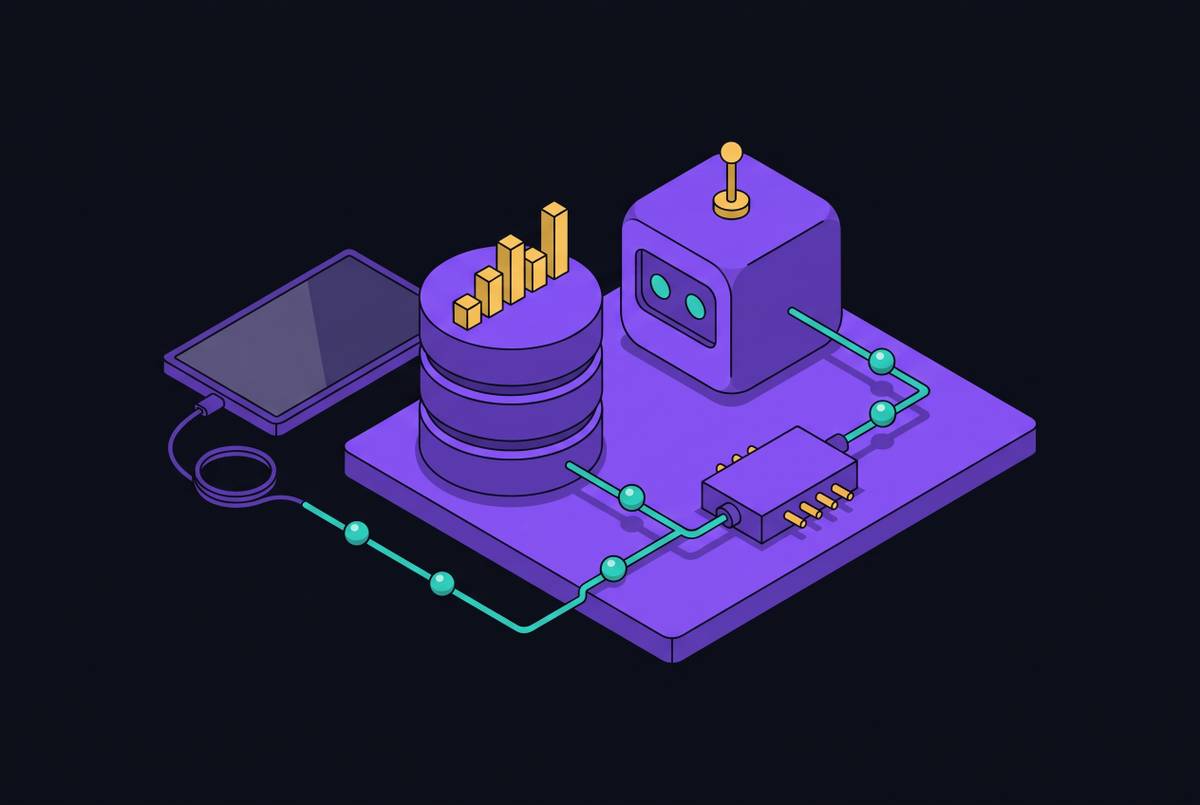
The Model Context Protocol gives agents a structured interface to data and tools. Pointing that interface at a governed analytical layer lets an agent obtain analytical context without accessing production Postgres. The official MCP architecture defines two layers. Its data layer specifies JSON-RPC communication and core primitives, including tools for executable functions, resources for context, and prompts for reusable templates, while its transport layer defines communication channels.
Governance comes from what that interface exposes and enforces. Every agent, regardless of its underlying LLM, can reach the analytical layer through one shared, access-controlled interface. That interface restricts the available metrics, datasets, and fields. MCP alone does not supply those decisions. The tool server must enforce the permissions and semantic boundaries established for the analytical layer.
The 2026-07-28 MCP specification addressed an enterprise deployment barrier by making MCP stateless at the protocol layer. Requests can go to any server instance behind a plain round-robin load balancer, so the system can use horizontal scaling without needing session affinity. Stateless does not mean free of context. User identity, permissions, approved datasets, and audit correlation still belong in signed tokens, external stores, and semantic services, with the tool server configured to enforce them.
Semantic bypass remains possible if an approved metrics interface also exposes unrestricted raw query tools. An agent can call the latter instead of using the governed definition, producing inconsistent numbers from the same records behind a different protocol. The design recommendation is therefore to limit access to pre-modeled datasets. This preserves API control without sacrificing semantic control. The agent reaches a defined calculation through a queryable interface, rather than receiving tables from which it must infer the business meaning.
What metrics a Supabase AI product should govern centrally, and when each one matters
A governed layer is only as useful as the definitions encoded within it. A mistake at that boundary reaches every human and agent consumer, so the company's current stage should determine the scope of the first metric definitions. Pre-seed teams focus on problem validation, activation, and signs that people keep using the product. Consistent user and event definitions come first. Without that foundation, later calculations can each be consistent on their own while counting different groups or events.
Seed-stage companies need early retention signals and evidence that a customer segment will pay. Conversion, cohort retention, and first revenue metrics therefore need definitions the team agrees on before investors question them. Series A raises the standard further. A repeatable acquisition engine and improving unit economics require single, auditable definitions of MRR, CAC, LTV, and payback period that can withstand an investor data room. Governance helps most before that conversation, when the team can still agree on definitions without having to explain conflicting answers as investors check them.
At growth stage, boards expand their attention to forecasting accuracy, sales efficiency, gross retention, cash burn, and operating leverage. Fragmented definitions then become an organizational problem because different consumers depend on different versions of the company's performance. The drift can begin with ordinary SQL. One engineer writes SUM(revenue) while another writes SUM(amount_captured), and Q2 revenue disagrees with itself until an investor asks for audited numbers and nobody can explain the gap.
A semantic layer lets teams keep a calculation in one place instead of maintaining it in each downstream interface. When a definition such as MRR or LTV changes centrally, that update reaches the dashboard, Slack report, and agent response together. The benefit extends beyond query correctness. Investors at Series A and later increasingly expect evidence of data maturity, and a demonstrable single source of truth for key metrics provides that signal. The governed layer becomes part of the company's ability to substantiate its business claims.
How early-stage AI product teams can get a governed data layer without a dedicated data engineer
A seed or early Series A team does not need a dedicated data engineer to establish this separation. It needs discipline about definitions and a tool or partner that encodes them into a governed layer. The earliest work is mostly definitional. Consistent event tracking, agreed metric definitions, and a single source of truth for customer records establish the basis for later analytics without requiring the historical path of hiring someone to write ETL pipelines, manage a warehouse, and maintain SQL. Most early-stage AI product teams cannot justify that cost and do not need to incur it.
For those teams, automated metric centralization should take priority over visual design in tool selection. Pre-calculated datasets can reach people through an inbox, Slack, or a dashboard instead of depending on someone remembering to run a query. An API-first product can use those same datasets without having to use the dashboard as its product interface. MCP extends the pattern to agent workflows. A governed layer built by a partner can send data to a human dashboard through the same access-controlled interface that answers agent queries, while keeping raw production tables out of reach.
The remaining discipline is to resist solving every local problem with another tool. The recommended pattern is one primary BI surface, one source of truth for metrics, and one MCP interface for agents. Each has a distinct role in the stack. Human presentation can change without redefining metrics, and agents can gain analytical access without acquiring production database access. For a Supabase-backed AI product, that boundary is what makes full API control compatible with governed answers and a protected operational backend.