Governance Primitives That Convert Raw Supabase Tables Into Agent-Safe Named Metrics
Five governance layers turn raw Supabase data into auditable metrics agents can safely cite.
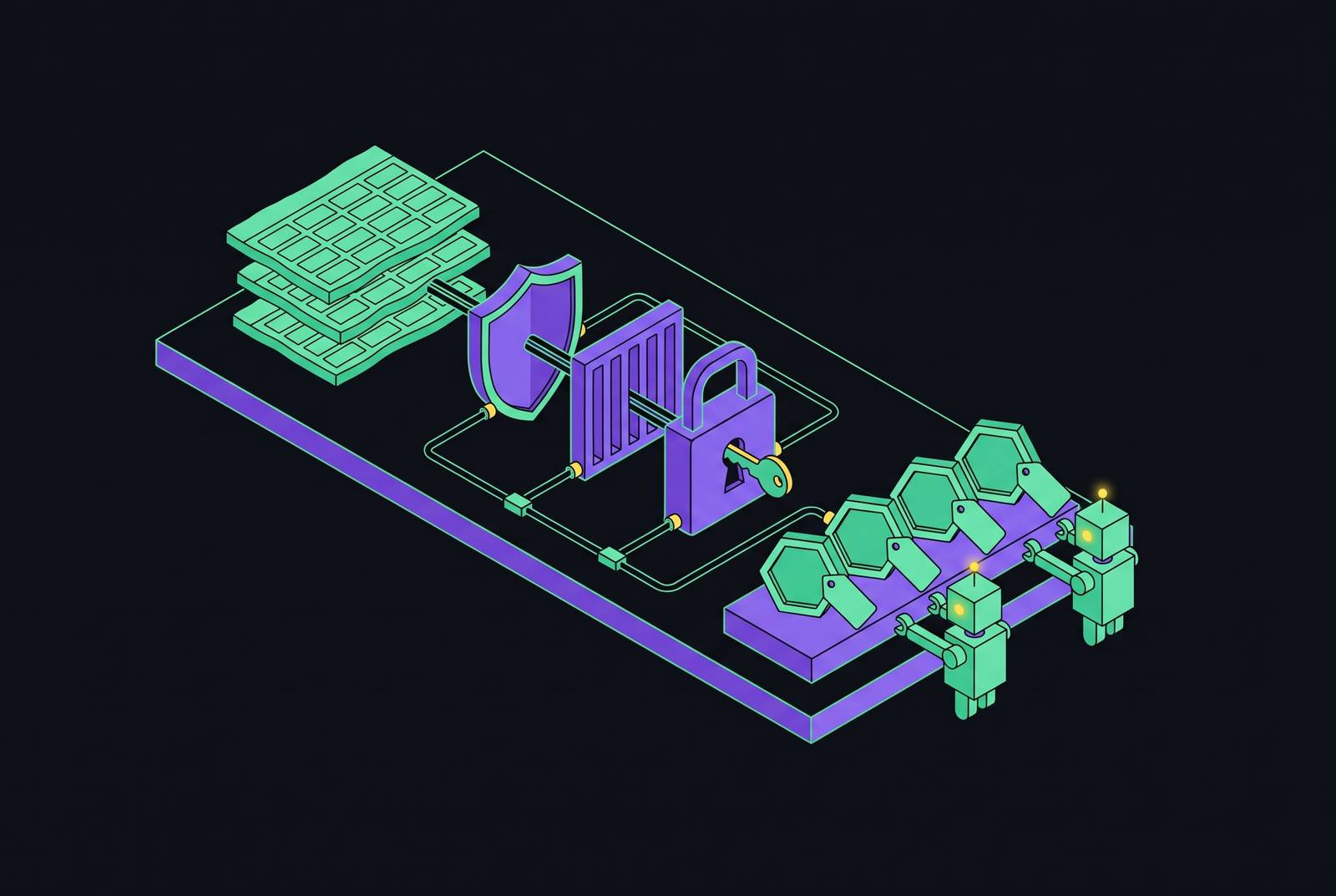
AI agents that access governed data on Supabase via MCP need a metric layer between the agent and production tables. Named metrics, versioned semantic definitions, pre-calculated datasets, access-scoped views, and audit-ready lineage turn raw records into answers an agent can safely cite. MCP provides connectivity, but these five primitives establish what a number means, who may see it, and how its origin can be proved.
Why raw Supabase tables are not a safe input for agents making business decisions
An agent answers a business question confidently, its Q2 revenue figure enters a decision, and the mistake remains invisible until an investor requests audited numbers. The SQL ran successfully. Yet one calculation used SUM(revenue) while another used SUM(amount_captured), and neither exposed the disagreement in business logic.
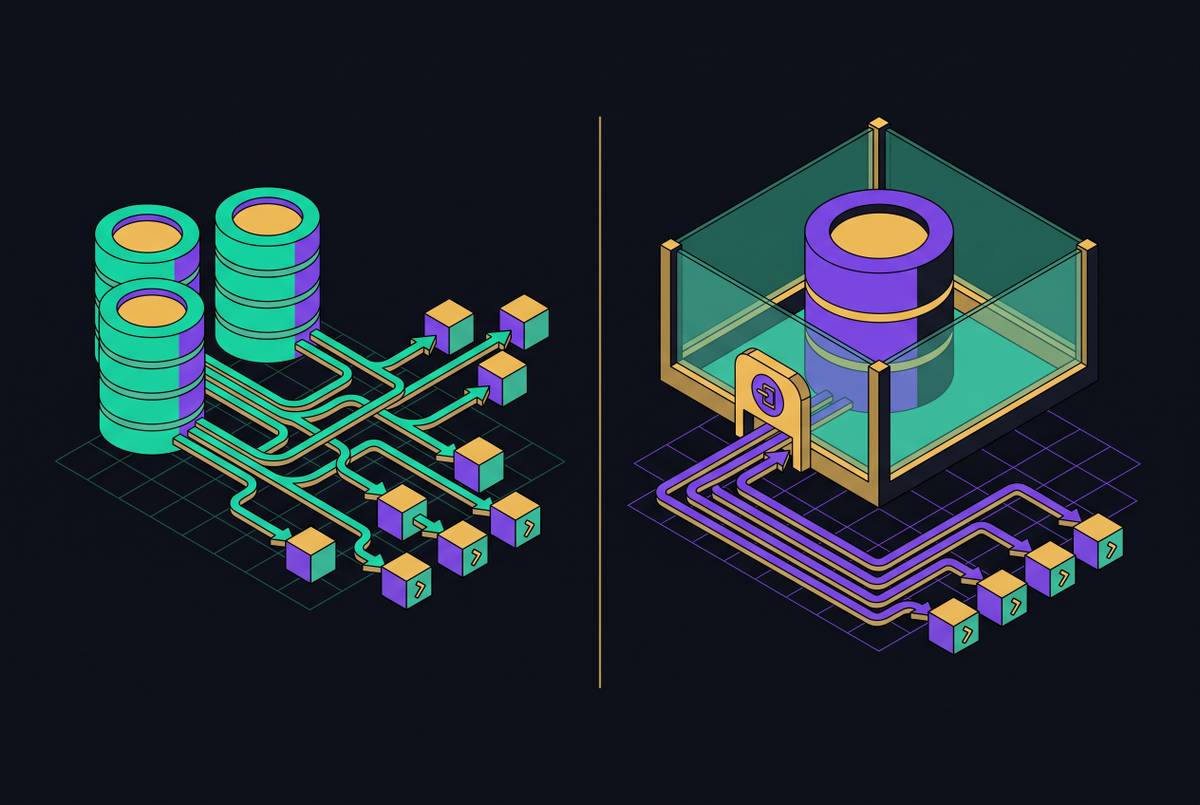
A raw Postgres table describes structure. Its schema cannot tell an agent which records are synthetic, which table is current, or how the organization defines a fiscal month. When the agent infers those rules from column names, fluent explanations can conceal an incorrect calculation. Without a review between the query and the decision, the error propagates at the agent’s operating speed.
Agent queries can exhaust connection pools, and adding instances multiplies demand while the bottleneck remains. Privileged credentials can also bypass row-level security, leaving application assumptions unsupported by database enforcement. The State of AI Agent Security 2026 found that 90 percent of organisations have unmonitored agents in production and that fleets have roughly doubled since December 2025. The exposure is growing in absolute terms.
How Supabase's own access model changed in response to agent-era risks
With Supabase’s April 2026 explicit-grant change, access to new tables became a choice that teams must make in code. Before that, a table made by a CLI script or AI coding tool could become reachable through the Data API without a person checking whether it was safe to expose. New tables can no longer become accidentally exposed through the REST or GraphQL layer. Existing tables keep their grants and can still be reached.
Supabase Select in October 2026 extended this principle to agent actions on project logs. A new MCP tool provides raw access through SQL, while controls specify what an agent can access and when it must pause for developer approval. The principle is least privilege for agents themselves. Supabase’s guidance calls for giving agents only the access needed for their job and alerting developers to riskier actions.
The Supabase + Perplexity Computer connector, announced August 7, 2026, illustrates why teams must extend those controls into analytics. It lets an orchestrator query Postgres tables, write results, maintain state across runs, and invoke Edge Functions. Before that announcement, a prompt-injection attack on the Supabase MCP server had made read-only, project-scoped access the standard advice in Supabase’s guidance. Broader capabilities make the governance gap more consequential. Grants let teams choose who has permission, but teams still need to define what the data means.
How can agents query Supabase through MCP without direct database access, and what does MCP establish?
MCP exposes three primitives with different jobs. Tools act by running queries, calling functions, and writing results. Resources supply context through schemas, governed datasets, and documented definitions. Prompts provide reusable templates for analytical workflows. A governed implementation exposes standardized metrics through Resources and controlled query templates through Prompts, rather than asking agents to reconstruct business logic from raw schema.
MCP’s July 2026 stateless revision removed the initialize/initialized handshake, session affinity, and shared protocol state through six Specification Enhancement Proposals. This lets an MCP server scale like a REST API. For analytical workloads, that independence extends to the production database only when the server serves pre-computed data stored separately. A stateless request that opens a production connection still consumes database capacity.
If three analysts define a conversion event differently, faster access distributes the disagreement to more consumers. An MCP server serving governed analytical data needs controls over access and a source that spells out what the data means for the business.
The named metric as the first and load-bearing governance primitive
A named metric is a declared business definition with an owner, a calculation, a scope, and a version. It states the question being answered, the formula, the records included or excluded, the fiscal or calendar scope, and the team or role responsible for the definition. Those elements make the metric a governed object rather than an interpretation assembled during a query.
For revenue, that distinction places finance exclusions inside the definition instead of leaving agents to infer them from column names. An agent can then cite monthly recurring revenue as defined by finance, rather than a sum from whichever revenue column it found. Nasdaq built a governed intelligence layer on dbt and Databricks so agents query explicit metric definitions. The essential act is writing the definition down and enforcing it.
Access controls around a metric govern a known business quantity, whereas controls around raw columns still leave interpretation unresolved. Pre-calculation needs an agreed definition or it simply preserves the wrong answer. Lineage needs that same anchor to distinguish a governed result from an agent’s improvised calculation. The named metric supplies the reference point for both.
Semantic definitions and how named metrics stay versioned and consistent
A semantic layer manages what metrics, entities, relationships, and verified logic mean for the business. The model is its content. The layer provides ownership, governance, distribution, and lifecycle management around that content. Without it, definitions remain scattered across spreadsheets, SQL files, and human memory, where an agent cannot reliably discover which one has authority.
With that layer, an MCP consumer receives the definition used by the analyst, dashboard, and automated report. Consistency no longer depends on each consumer copying the logic correctly. Versioning preserves that consistency through change. Finance exclusions, fiscal calendars, and cohort rules need versions and effective dates so historical outputs can be tied to the definitions that produced them. Otherwise, two internally consistent answers may be historically incomparable.
Supabase teams can keep this governed meaning in Postgres itself, using views built over production tables without changing the schema or moving data. A separate warehouse is not required to define metrics. Stable, versioned views give consumers a consistent target, while pg_stat_statements, enabled by default on managed Postgres, provides query visibility. Teams can keep definitions in Postgres without running every agent request against production.
Pre-calculated datasets and why agents should consume results, not generate queries
A pre-calculated dataset executes the metric definition ahead of time and stores the result in a governed form. The agent receives the answer. This prevents mistakes such as joins on the wrong key, missing finance exclusions, and date filters that ignore the fiscal calendar. Pre-calculation protects the application of the definition. It cannot repair a definition that was wrong to begin with.
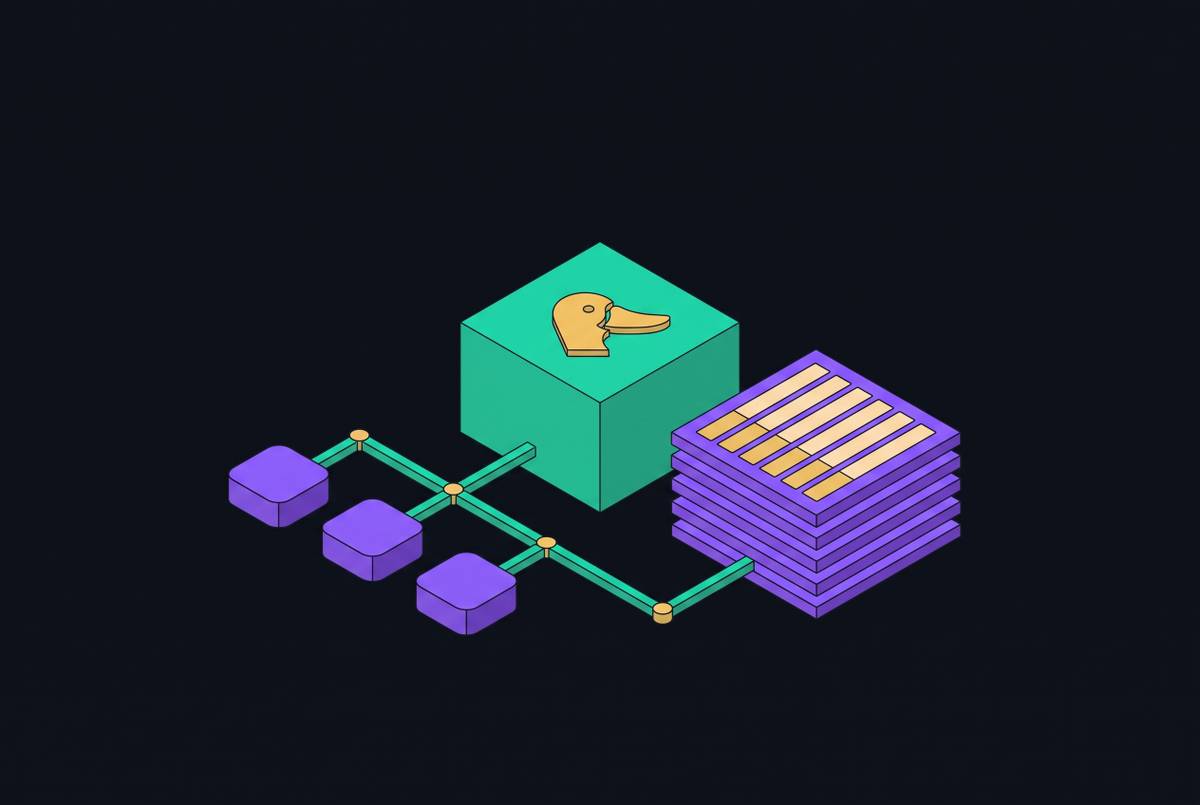
Columnar formats such as Parquet and engines such as DuckDB can serve inexpensive analytical queries without opening a production connection. A governed analytical copy also separates agent traffic from transactional work.
Pre-calculation makes stateless MCP practical for analytical delivery because each request can retrieve an already computed result. Versioned snapshots add reproducibility by tying outputs to a particular calculation run and dataset state. lakeFS identifies lineage and version control as requirements for agent workloads to move beyond pilots. Together, those controls make a stored result inspectable after the agent has used it.
Access-scoped views and attribute-based controls for each agent's slice of a metric
Access-scoped views put the permitted slice into the data object exposed to the agent. The restriction belongs at the data layer. Row-level controls govern which records are visible, while column-level masking redacts sensitive fields such as PII, compensation data, and unreleased revenue figures. Application filters alone leave other query paths open to bypass. Data-layer enforcement makes the restriction independent of how the prompt is phrased.
Attribute-based access control adds distinctions that a shared service account cannot express. Its five layers give teams a checklist for deciding what to allow. User governs role, team, and account scope to keep access within the boundaries set by the organization. Agent governs the approved agent registry so agents with different tasks do not inherit the same permissions. Tool governs the MCP server allowlist and SQL tool scope, without which an approved agent may reach data through an unapproved path.
Metric limits access to approved semantic metrics, without which authorization can extend to undefined calculations. Answer governs aggregation thresholds, citation policy, and review gates, without which permitted inputs may still produce an unauthorized disclosure. These controls apply before an action executes. The Open Agent Passport paper describes the need to authorize actions before they execute and reports that social engineering succeeded against model-only controls, while a declarative policy layer reduced comparable attacks to zero.
Supabase’s service_role key bypasses RLS by design, making its convenience a common integration trap. Superusers also bypass RLS, as do table owners unless FORCE ROW LEVEL SECURITY is set. A team that exposes metrics should use a scoped, non-superuser role with explicit grants only on the specific metric objects it needs. The credentials must preserve the intended restriction. This completes the explicit-grant principle at the agent-facing metric layer.
Audit-ready lineage and how every agent-cited number becomes traceable
Lineage must be recorded automatically by the infrastructure handling agent interactions. An agent can omit or hallucinate provenance. Structured transcripts instead record which agent accessed which metric version and governed view, at what timestamp. Access to those transcripts needs the same scope controls as the underlying metric, so audit records do not become a broader route into restricted data.
Those records make changes in an answer diagnosable. A number may shift because source data changed, a definition was updated, or the permitted access scope narrowed. Versioned definitions and recorded interactions separate those causes. The same lakeFS guidance identifies lineage and version control as the means to trace wrong answers to stale or incomplete inputs, rather than reconstructing what an agent might have queried.
Operational observability answers a different question from lineage. pg_stat_statements, active connection counts, and p50/p95 latency dashboards show how queries affect the system, while lineage identifies the governed source behind an answer. Active connections approaching max_connections signal production risk. Supabase’s performance advisors surface some operational information, but agent-specific, metric-version lineage requires deliberate instrumentation.
That distinction makes the opening Q2 failure recoverable. At the investor meeting, the team can trace the cited figure to its calculation, definition version, and included records. If the answer came from an ad-hoc inference, the record can establish that the governed metric was not its source.
The five primitives as a stack and where to start
Each primitive provides the foundation for the next. The named metric gives the semantic layer something stable to version, and that definition gives pre-calculation a governed calculation to execute. Access scoping then restricts a known result, while lineage connects its use to the definition and dataset that produced it. None substitutes for another. A perfectly restricted but undefined number remains unsafe to cite.
For a team starting from raw tables, the practical sequence begins with the decision-critical metrics, including revenue, activation, and churn. The next steps are to write those definitions into governed Postgres views, pre-calculate a governed analytical copy, apply scoped access, and instrument every agent interaction. Operational monitoring runs in parallel from day one. The aim is to start with the smallest complete stack that protects important decisions and grow it as agents are allowed to do more.
Founders without a dedicated data engineering team must choose between building this themselves and using a purpose-built layer that has all five primitives. The selection criteria remain the same. Humans and agents need to draw business meaning from the same governed source and use the same analytical rules across their interfaces. For most Supabase teams, agents are already in the loop, whether governance is ready or not. Which metric should become safe to cite first?